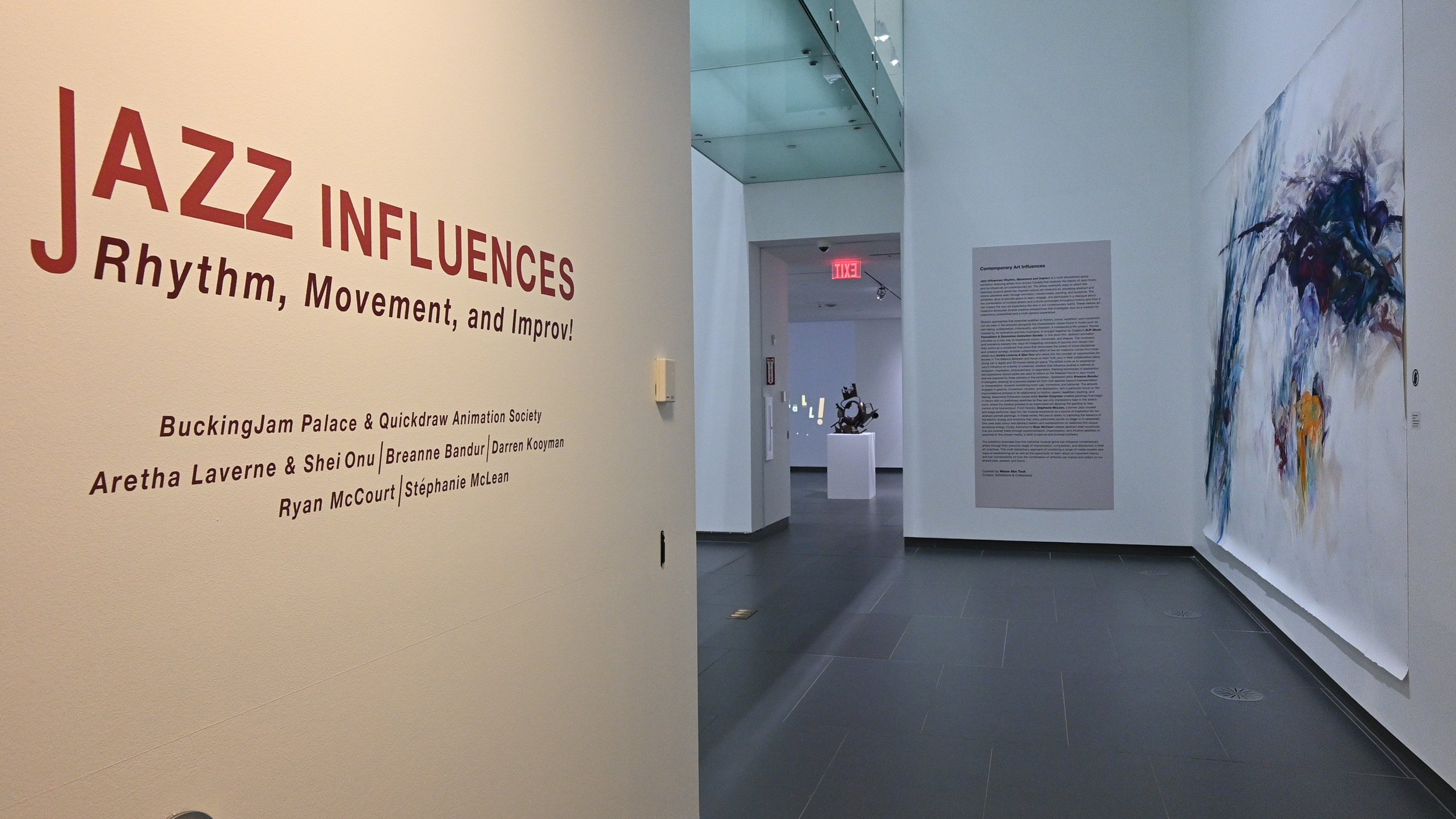
Jazz Influences: Rhythm, Movement and Improv!
Aretha Laverne & Shei Onu, Breanne Bandur, Darren Kooyman, Ryan McCourt, Stéphanie McLean
collaborative collective BuckingJam Palace & Quickdraw Animation Society, (Animators: Noah Spencer, Troy Kokol, Sheena Agnew, Arielle McCuaig, Leslie Bell, Lyndon Navalta, Musicians: Caity Gyorgy, Carsten Rubeling, Mark Limacher, Luis ‘El Pana’ Tovar, Lisa Jacobs)
July 21, 2022 - November 6, 2022
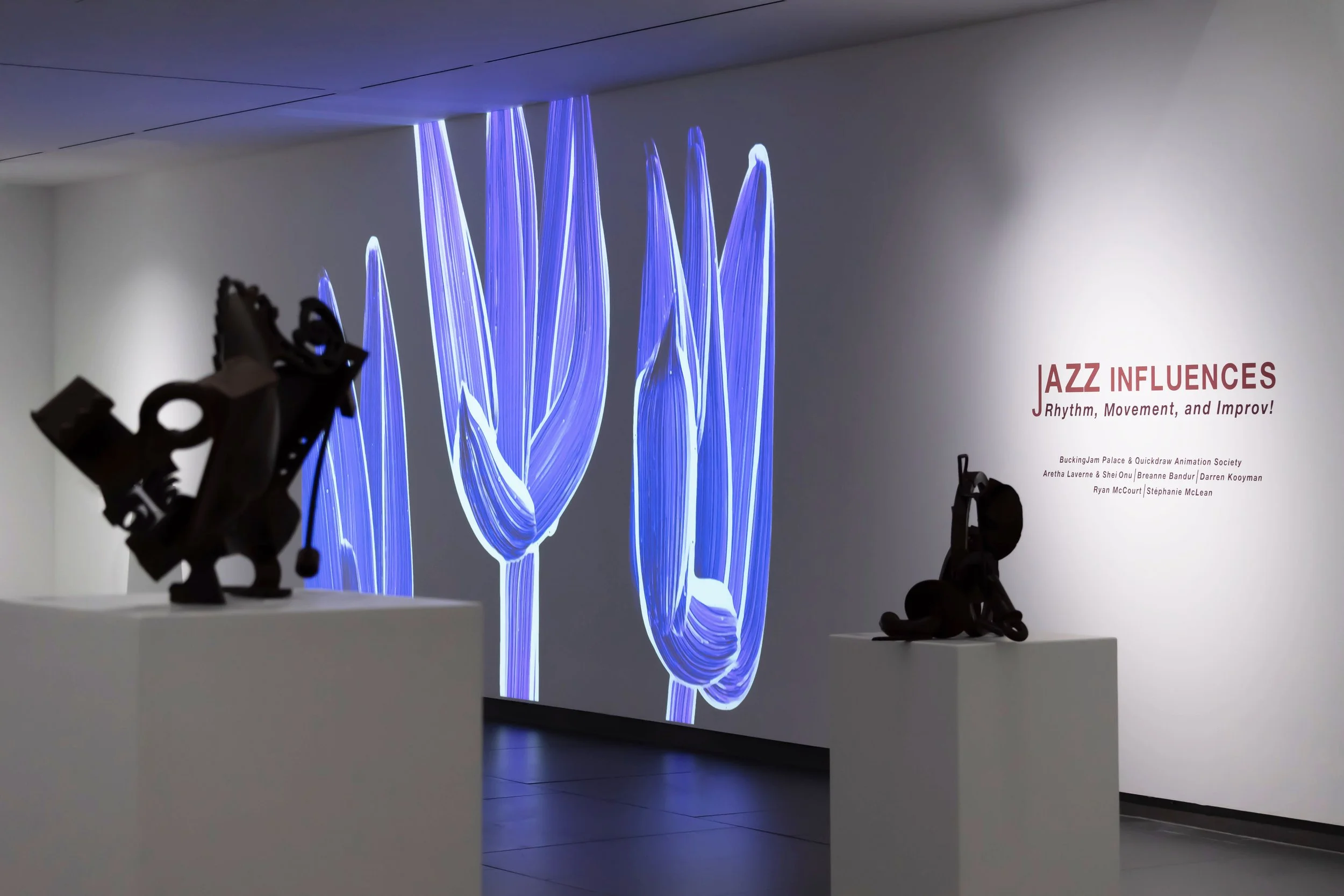
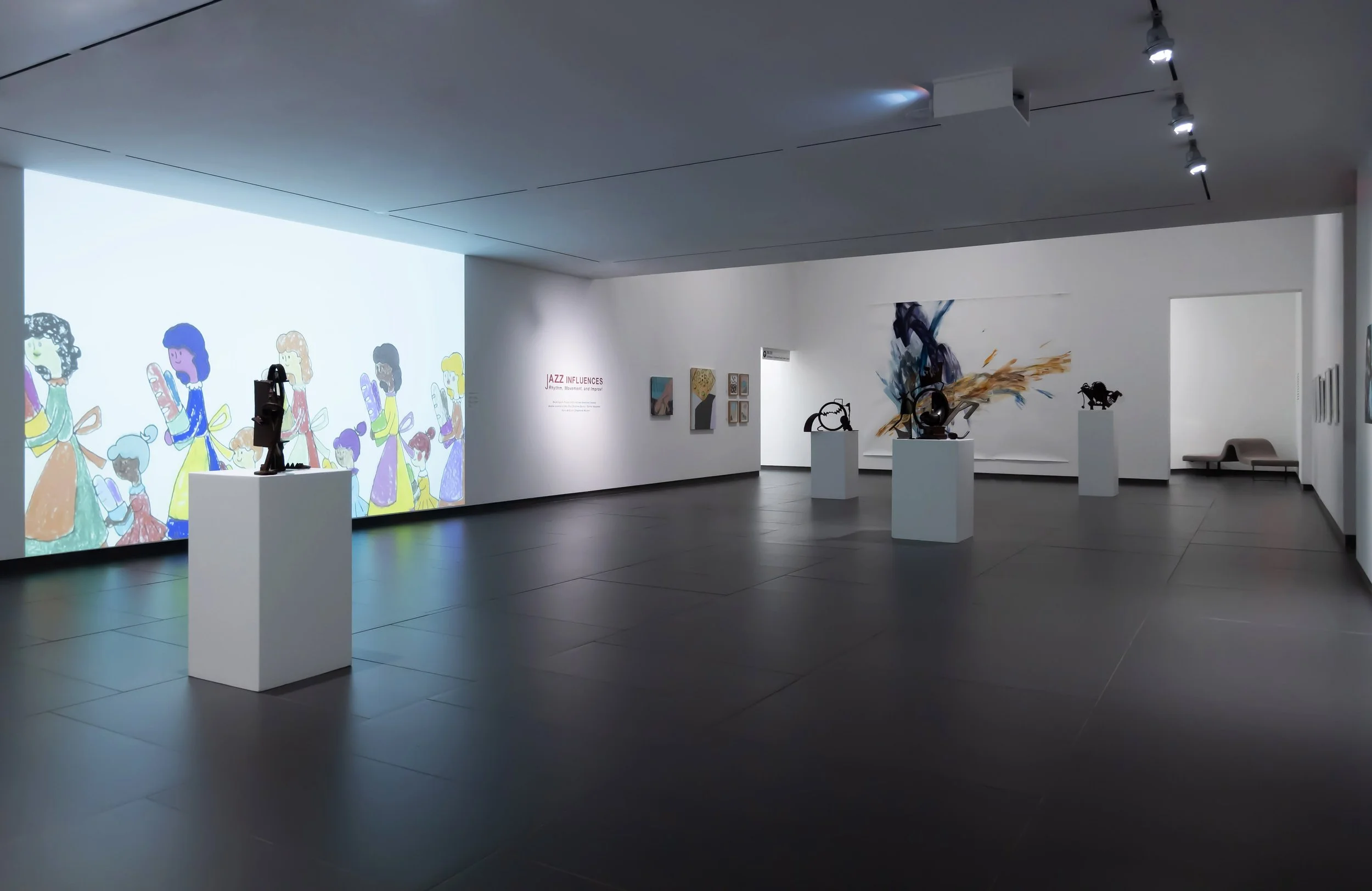
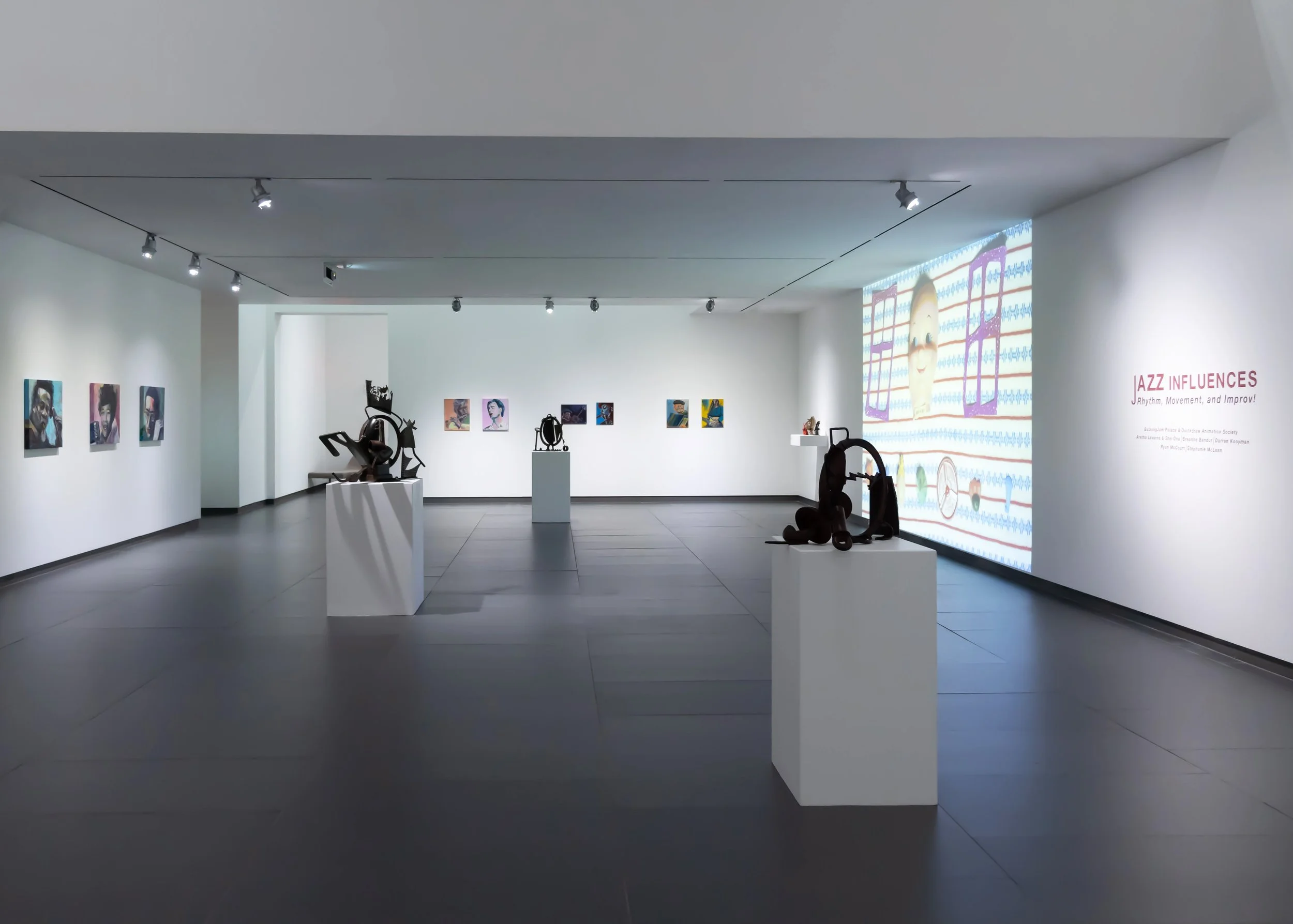
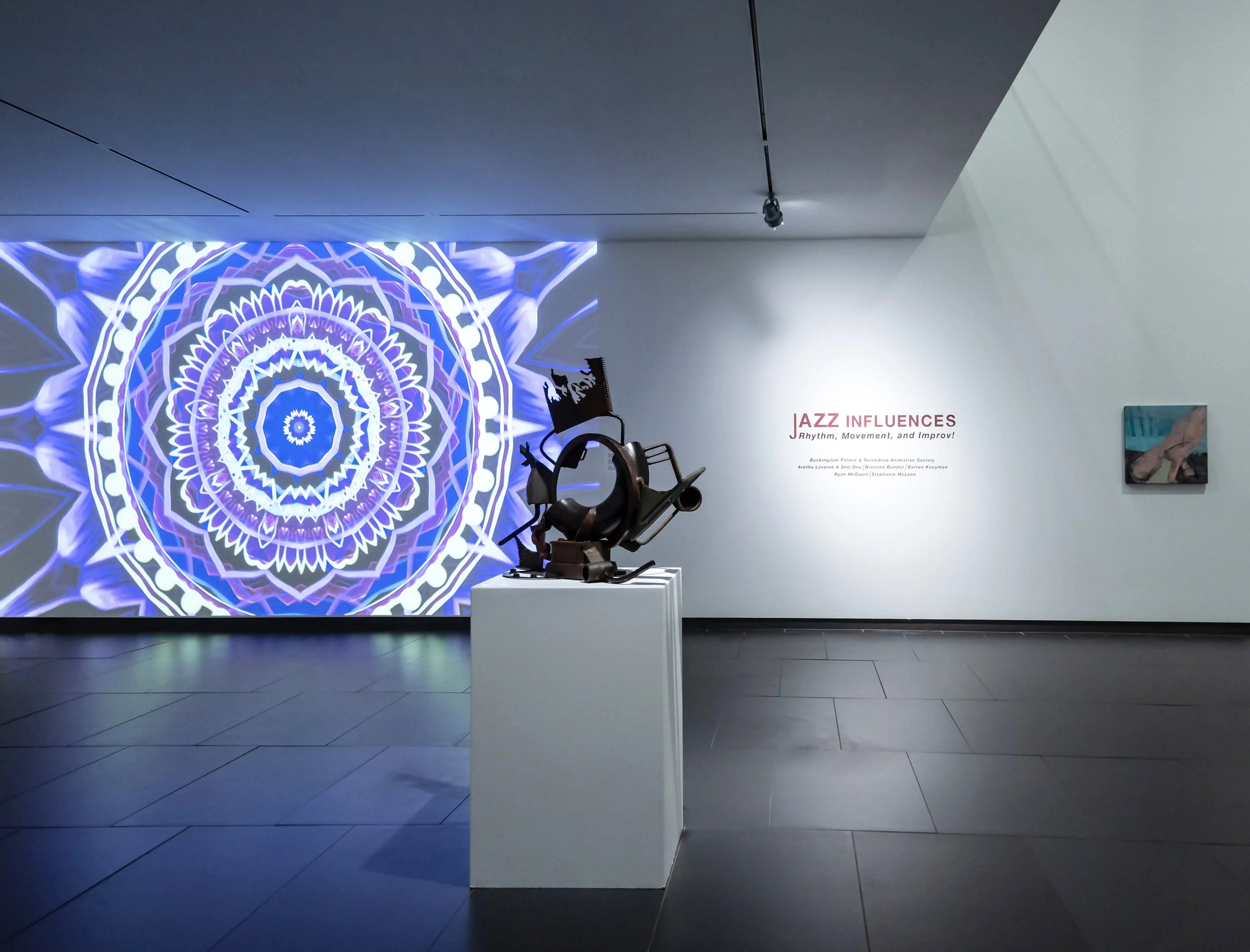
Jazz Influences: Rhythm, Movement and Improv! is a multi-disciplinary group exhibition featuring artists from across Canada that explores the history of jazz music and its influences on contemporary art. The artists exemplify ways in which this historical musical genre has inspired various art mediums by emulating abstract and improv elements seen through animation, mixed media, painting, and sculpture.
The exhibition aims to provide space for visitors to learn, engage, and participate in a dialogue about the combination of multiple artistic exchanges and how it can impact the way we experience the arts in our contemporary world.
Historical Musical Influences
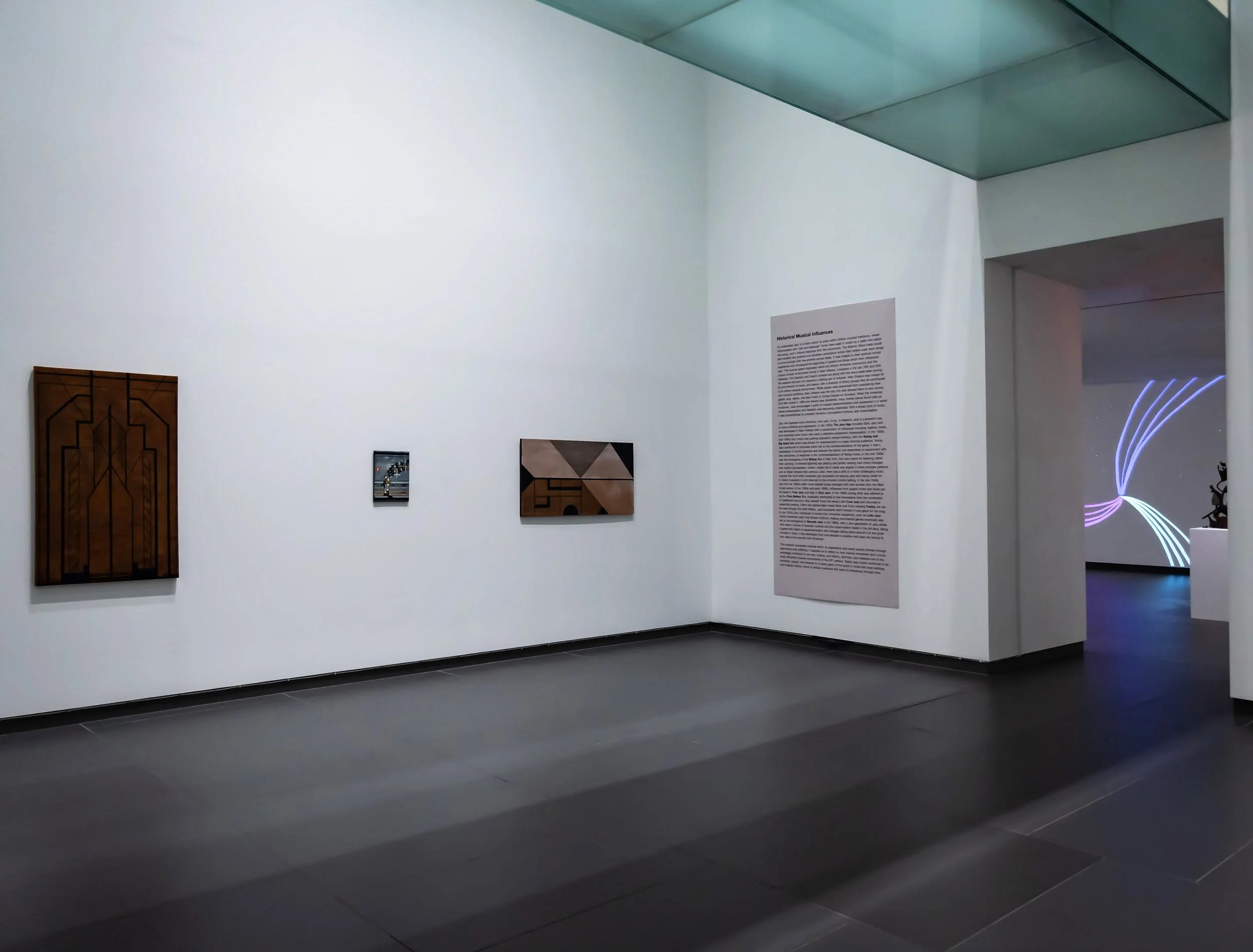
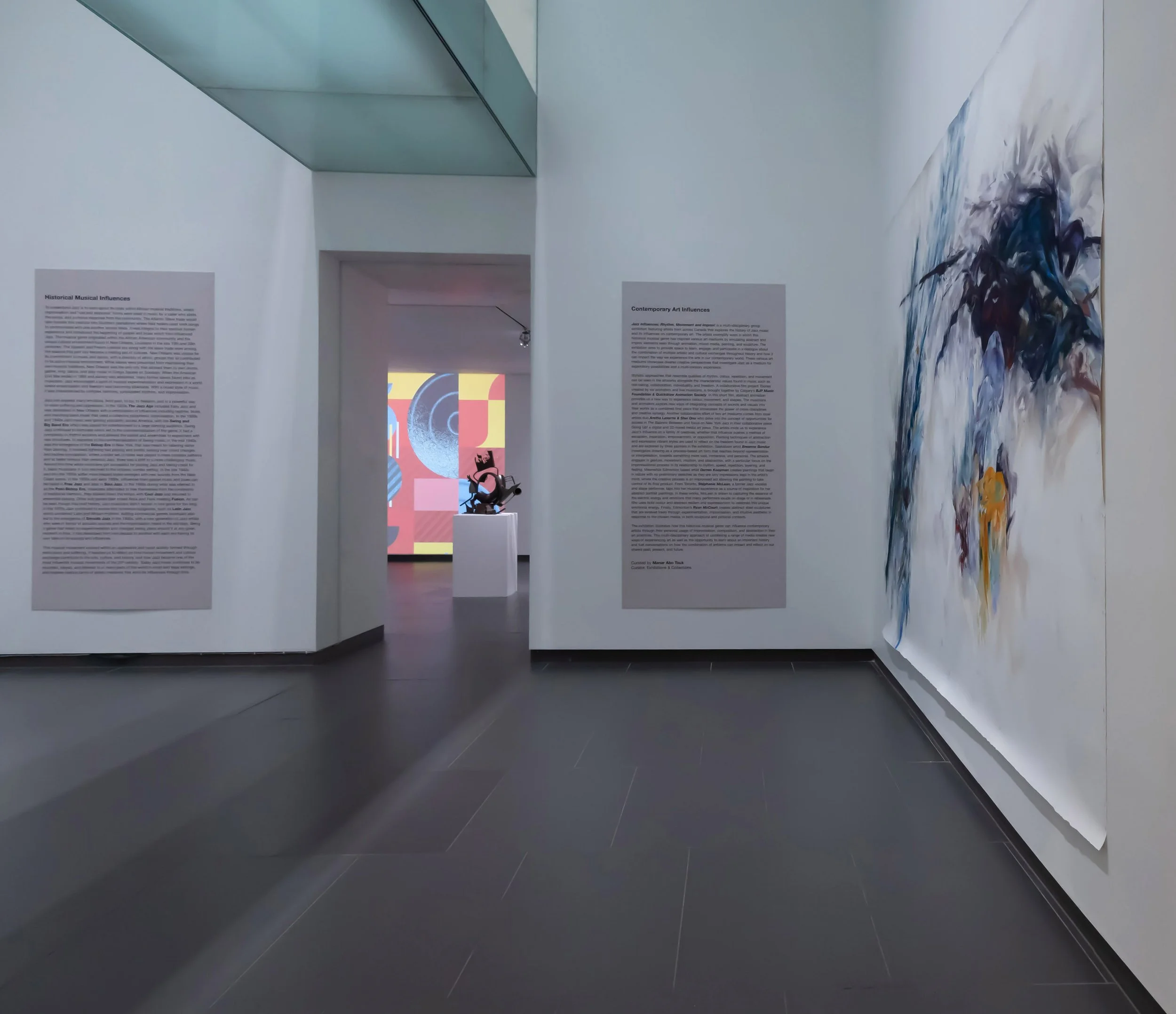
To understand Jazz is to learn about its roots within African musical traditions, where improvisation and “call and response” forms were used in music by a caller who starts the songs, and a chorus response from the community. The Atlantic Slave trade would later transfer this practice into Southern plantations where field hollers used work songs to communicate with one another across fields. It was integral to their spiritual human experience and introduced the beginning of gospel and blues which then influenced Jazz. The musical genre originated within the African American community and the unique cultural environment found in New Orleans, Louisiana in the late 19th and 20th centuries. The Spanish and French colonial era along with the slave trade were among the reasons this port city became a melting pot of cultures. New Orleans was unique for its commitment to music and dance, with a diversity of ethnic groups that all contributed to its active musical environment. While slaves were prevented from maintaining their own musical traditions, New Orleans was the only city that allowed them to own drums, gather, sing, dance, and play music in Congo Square on Sundays. When the American Civil War ended in 1865 and slavery was abolished, many former slaves found jobs as musicians. Jazz encouraged a spirit of musical experimentation and expression in a world where emancipation and freedom was becoming attainable. With a broad style of music, it was characterized by complex harmony, syncopated rhythms, and improvisation.
Jazz can express many emotions, from pain, to joy, to freedom, and is a powerful way to voice suffering and oppression. In the 1920s The Jazz Age included Early Jazz and was developed in New Orleans with a combination of influences including ragtime, blues, and marching band music that used a collective polyphonic improvisation. In the 1930s and 1940s Jazz music was gaining popularity across America, with the Swing and Big Band Era which was played for entertainment to a large dancing audience. Swing Jazz continued to dominate which led to the commercialization of the genre, it had a complexity in rhythm sections and allowed the soloist and ensembles to experiment with new structures. In response to the commercialization of Swing music, in the mid 1940s was the emergence of the Bebop Era in New York, that was meant for listening rather than dancing. It involved lightning fast playing and prolific soloing over chord changes and routine syncopation, where a wider set of notes was played in more complex patterns and at faster tempos than previous Jazz, there was a shift to a more challenging music. Around this time white musicians got successful for playing Jazz and taking credit for it, black musicians in turn returned to the virtuosic combo setting. In the late 1940s and into the 1950s softer more relaxed styles emerged with new sounds from the West Coast scene. In the 1950s and early 1960s, influences from gospel music and blues can be heard in Free Jazz and later in Soul Jazz. In the 1960s during what was referred to as the Post-Bebop Era, musicians attempted to free themselves from the constraints of traditional harmony, they slowed down the tempo with Cool Jazz and returned to ensemble playing. Other sub genres later mixed Rock and Funk creating Fusion. As can be seen though this brief history, Jazz musicians didn’t remain in one genre for too long. In the 1970s Jazz continued to evolve into numerous subgenres, such as Latin Jazz which combined Latin and African rhythms. Adding commercial genres eventually also led to the emergence of Smooth Jazz in the 1980s, with a new generation of Jazz artists who were in favour of acoustic sounds and the improvisation heard in the old days. Being a genre that relied on experimentation and changes taking place around it at any given moment in time, it has developed from one decade to another with each era having its own take on its sounds and influences.
This musical movement evolved within an oppressive and racist society formed through restrictions and suffering. It teaches us to reflect on how human movement and cultural exchange contribute to the arts, culture, and history, and how Jazz became one of the most influential musical movements of the 20th century. Today Jazz music continues to be recorded, played, and listened to in many parts of the world in small and large settings, and inspires various forms of artistic mediums that echo its influences through time.
Contemporary Art Influences
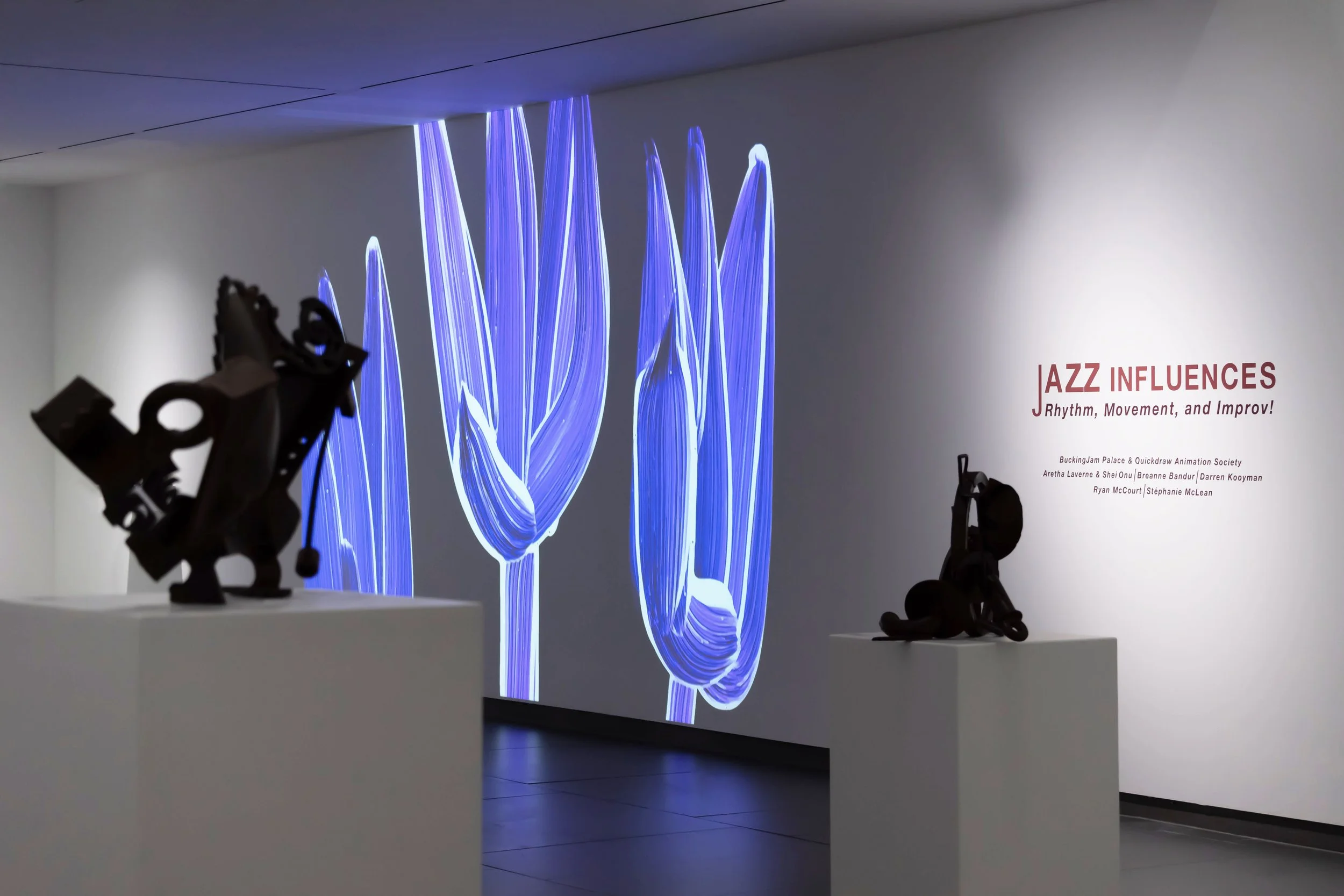
Jazz Influences: Rhythm, Movement and Improv! is a multi-disciplinary group exhibition featuring artists from across Canada that explores the history of Jazz music and its influences on contemporary art. The artists exemplify ways in which this historical musical genre has inspired various art mediums by emulating abstract and improv elements seen through animation, mixed media, painting, and sculpture. The exhibition aims to provide space to learn, engage, and participate in a dialogue about the combination of multiple artistic and cultural exchanges throughout history and how it can impact the way we experience the arts in our contemporary world. These various art mediums showcase diverse creative perspectives that investigate Jazz as a medium for exploratory possibilities and a multi-sensory experience.
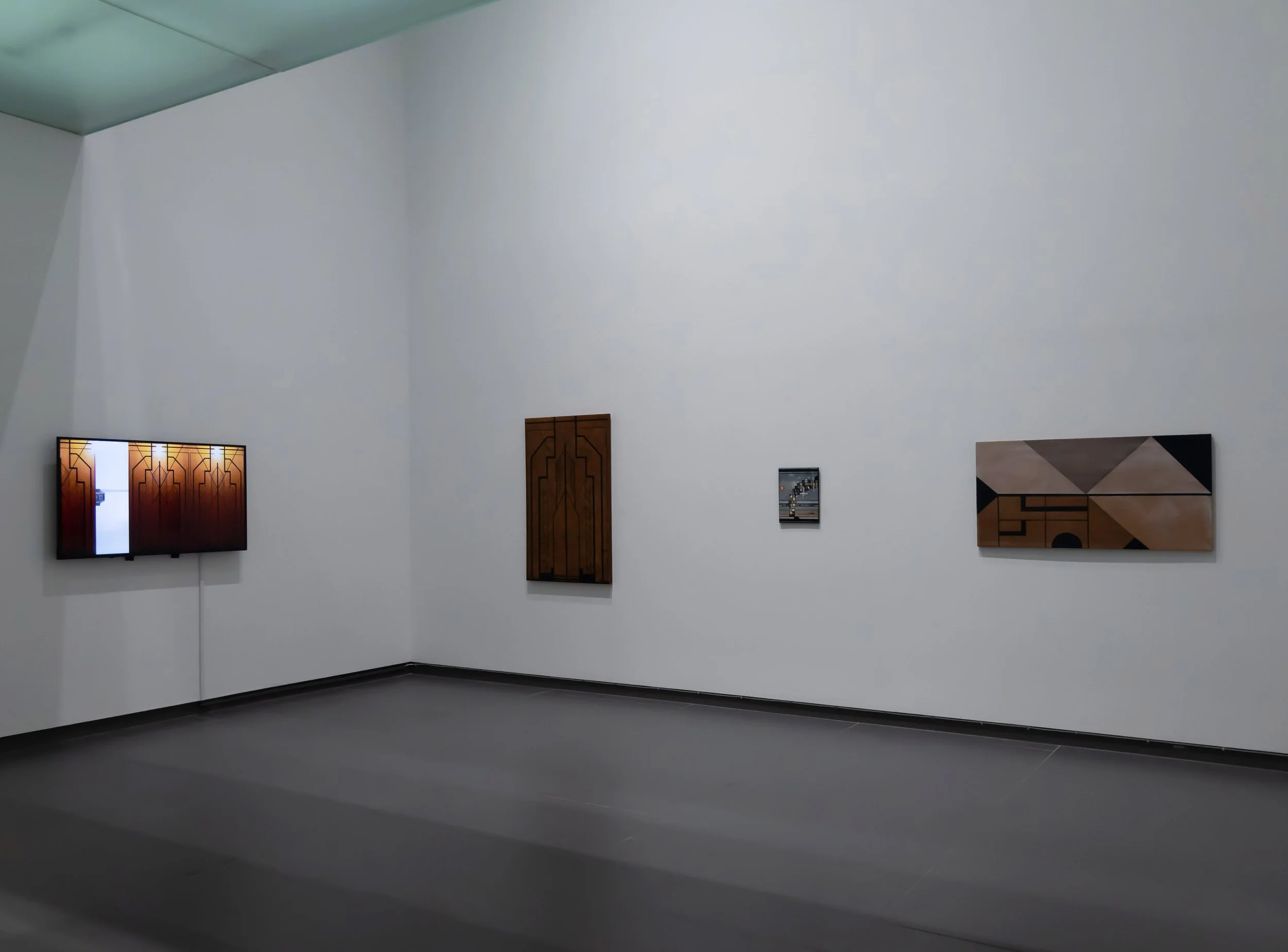
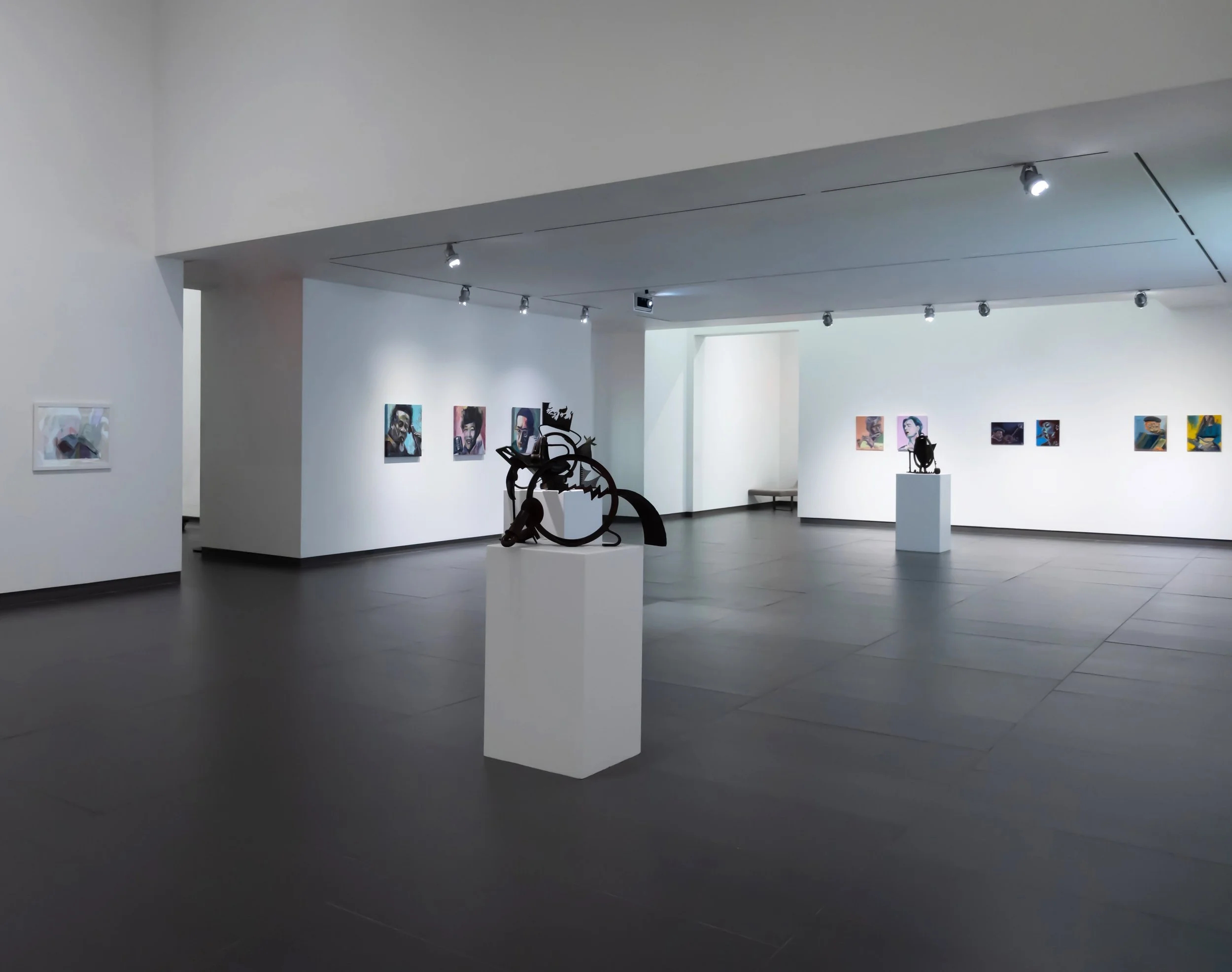
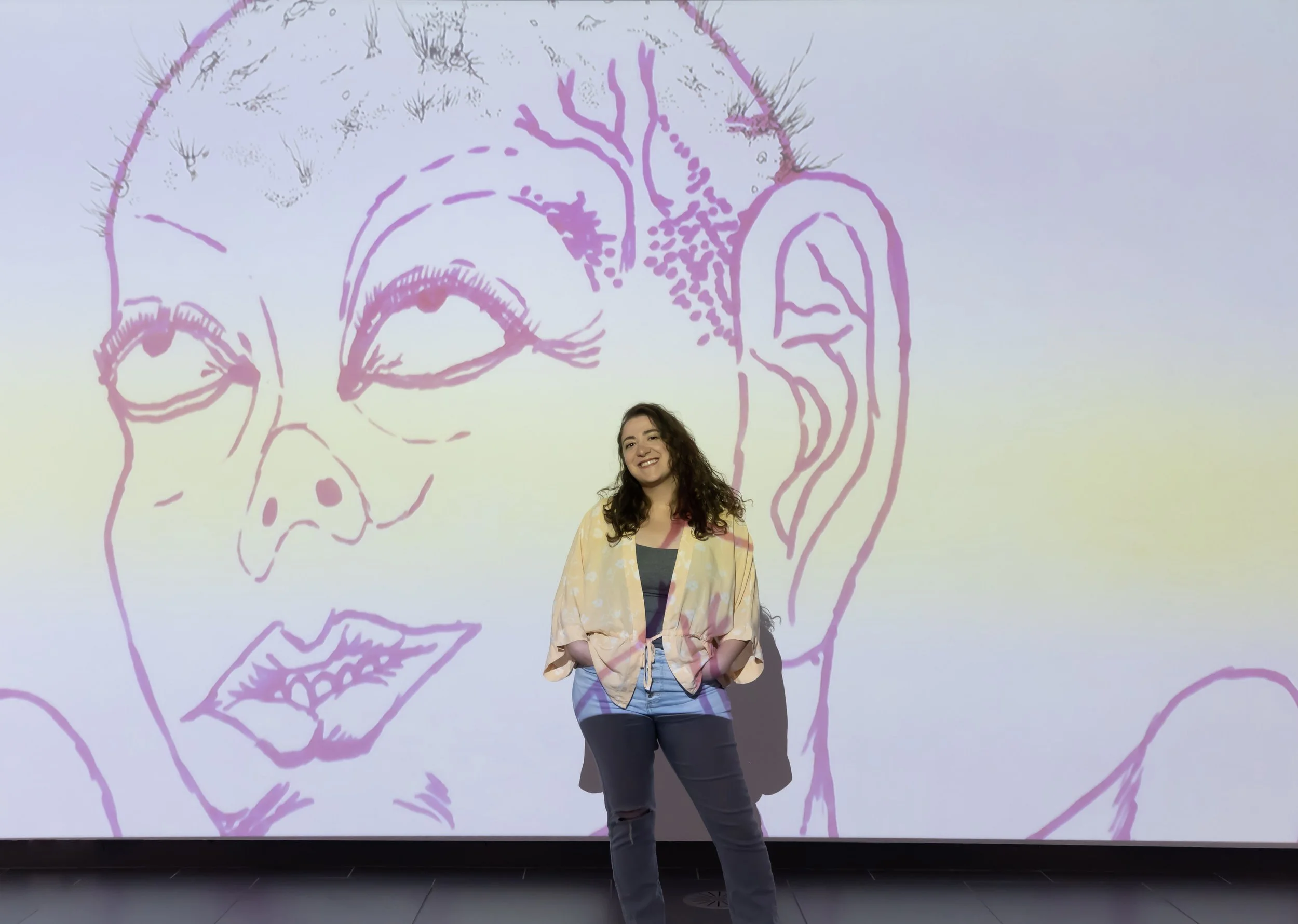
Stylistic approaches that resemble qualities of rhythm, colour, repetition, and movement can be seen in the artworks alongside the characteristic values found in music such as risk-taking, collaboration, individuality, and freedom. A collaborative film project Toones created by six animators and five musicians, is brought together by Calgary’s BJP Music Foundation and Quickdraw Animation Society. In this short film, abstract animation provides us a new way to experience colour, movement, and shapes. The musicians and animators explore new ways of integrating concepts of sounds and visuals into their works as a combined final piece that showcases the power of cross-disciplines and creative synergy. Another collaborative effort of two art mediums comes from local artists duo Aretha Laverne & Shei Onu who delve into the concept of opportunities for access in The Balance Between and focus on New York Jazz in their collaborative piece Going Up! a digital and 2D mixed media art piece. The artists invite us to experience Jazz's influence on a family of creatives, whether that influence pushes a method of escapism, inspiration, empowerment, or opposition. Painting techniques of abstraction and expressive vibrant styles are used to reflect on the freedom found in Jazz music and are explored by three painters in the exhibition. Saskatoon artist Breanne Bandur investigates drawing as a process-based art form that reaches beyond representation or interpretation, towards something more vast, immersive, and personal. The artwork engages in gesture, movement, intuition, and abstraction, with a particular focus on the improvisational process in its relationship to rhythm, speed, repetition, layering, and feeling. Meanwhile Edmonton based artist Darren Kooyman creates paintings that begin in nature with no preliminary sketches as they are only impressions kept in the artist’s mind, where the creative process is an improvised act allowing the painting to take control of its final product. From Toronto, Stéphanie McLean, a former Jazz vocalist and stage performer, taps into her musical experience as a source of inspiration for her abstract portrait paintings. In these works, McLean is drawn to capturing the essence of the electric energy and emotions that many performers exude on stage or in rehearsals. She uses bold colour and abstract realism and expressionism to celebrate this unique emotional energy. Finally, Edmonton’s Ryan McCourt creates abstract steel sculptures that are evolved freely through experimentation, improvisation, and intuitive aesthetic in response to the chosen media, in both sculptural and pictorial contexts.
The exhibition illustrates how this historical musical genre can influence contemporary artists through their personal usage of improvisation, composition, and abstraction in their art practices. This multi-disciplinary approach of combining a range of media creates new ways of experiencing art as well as the opportunity to learn about an important history and fuel conversations on how the combination of artforms can impact and reflect on our shared past, present, and future.